Cape Point vs Cape Agulhas: Where Do the Oceans Meet?
On many tours, someone will point to the dramatic cliffs at Cape Point and ask, ‘So, this is where the Atlantic and Indian Oceans meet?’
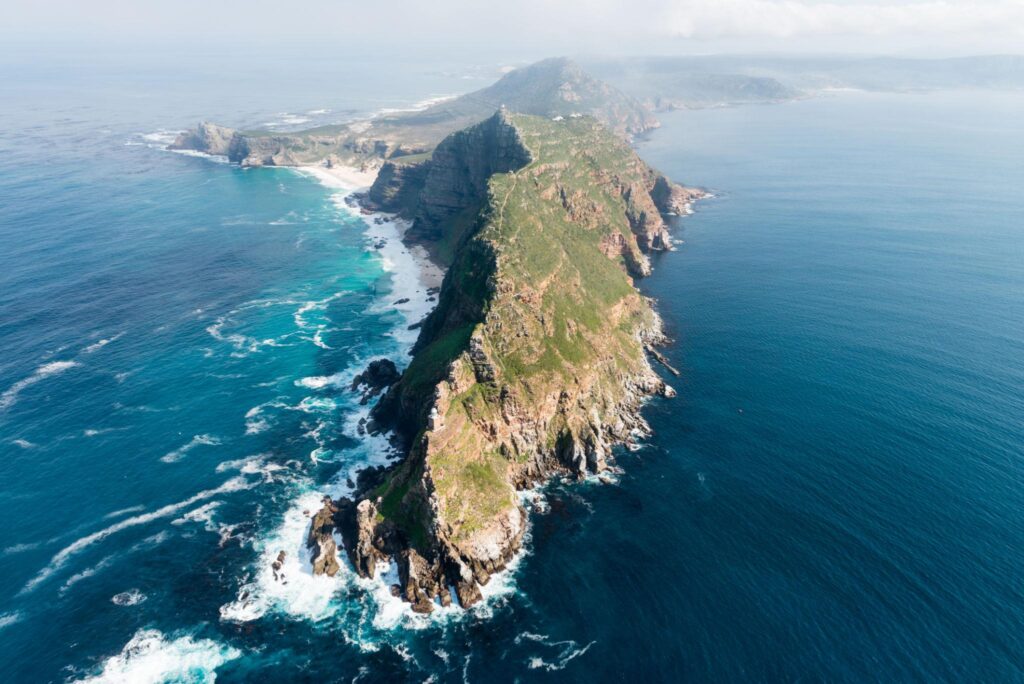
It’s a pretty common misconception about South Africa travel, and it’s easy to see why. Standing at Cape Point feels like you’re on the edge of the world. The cliffs drop into restless seas, the wind carries salt and the landscape feels wild and untamed. If there was ever a place that looked like the meeting point of two oceans, this would be it.
But, geographically, the southernmost tip of Africa is almost 150 kilometres further southeast at Cape Agulhas. And that’s where the story gets interesting.

Cape Point: Drama, History and the Edge of Africa
Cape Point is part of the Table Mountain National Park, managed by SANParks, and is located in one of the richest floral regions on earth, the Cape Floral Kingdom. This isn’t just a scenic stop; it’s a place filled with maritime history.
For centuries, sailors rounding the Cape were afraid of these waters. Violent storms, hidden reefs and unpredictable currents made this coastline one of the great challenges of global navigation.
Portuguese explorers searching for a sea route to the East passed this coastline in the late 1400s, opening trade routes that would change world history.The old lighthouse perched high on Cape Point cliffs was built back in 1860 and it was quite the sight! But there was a catch: the height gave it such amazing views, but it also meant the fog often obscured it, making it hard for ships below to see the light.
After the Lusitania disaster in 1911, they decided to build a new lighthouse lower down, closer to the sea.
Today, when people think of Cape Point, they usually remember:
• how huge the cliffs are
• the endless ocean views
• the feeling of being right at the edge of Africa
And honestly, it does feel that way.

Cape Agulhas: The True Southern Tip of Africa
Cape Agulhas is a bit quieter. No towering cliffs. No funicular. No crazy tourist crowds. But in many ways, it feels more real. The Cape Agulhas Lighthouse is the third built lighthouse in South Africa and stands in quiet pleasure overlooking the Indian and Atlantic oceans.
The name ‘Agulhas’ comes from the Portuguese word for ‘needles’. Early sailors noticed that their compass needles pointed almost perfectly to true north here, which was unusual back then.
This coastline became infamous among mariners. The mix of storms, currents and hidden reefs led to countless shipwrecks over the years.
The town of Arniston nearby even got its name from one such disaster. At Cape Agulhas, there’s a simple marker that marks the official line between the Atlantic and Indian Oceans.
Whether the oceans actually ‘meet’ there on any given day is more complicated because ocean currents change all the time, but symbolically, it’s recognised as the dividing point.
And unlike Cape Point, Cape Agulhas has a different kind of vibe. It feels remote. Still. Open.
There’s something quietly powerful about standing at the southernmost tip of an entire continent with nothing but ocean between you and Antarctica.
Cape Point or Cape Agulhas; Which should you visit?
The honest answer is ....... they’re completely different experiences.
Visit Cape Point if you’re looking for:
• dramatic scenery
• iconic Cape Town landscapes
• wildlife and fynbos
• cliff-top viewpoints
• a classic day trip experience
If you’re thinking of visiting Cape Agulhas, here are some reasons why:
• It’s the very tip of Africa!
• It’s a more relaxed trip.
• It feels like a road trip.
• It’s rich in maritime history.
• It gives you a deeper connection to the place.
For many, Cape Point is the picture in their minds. Cape Agulhas is the feeling they get.
The best way to experience both? Take your time! One of the biggest errors travellers make in the Western Cape is to rush things.
Cape Point needs time to be truly appreciated. So does the scenic drive to Cape Agulhas, winding through fields of wheat, charming coastal villages and the ever-changing scenery of the Overberg.
The real magic often happens when you’re not even planning to stop:
• Stops in quaint towns.
• Hearing tales of shipwrecks.
• Watching the ocean light change.
• Discovering hidden gems you didn’t know existed.
That’s where travel becomes more than just ticking off a list.
And maybe that’s the real reason for the Cape Point versus Cape Agulhas debate.
One stirs your imagination. The other helps you see things differently.